Custom jewelry has always been a blend of artistry and engineering. What makes today’s era different is the quiet but powerful role of artificial intelligence in shaping how engagement rings, pendants, bracelets, and earrings are imagined and produced. AI does not replace craftsmanship; it strengthens it by bringing clarity, speed, and analytical depth to the creative process.
Behind every diamond setting and polished band, there is now often a layer of data-driven insight. Preferences, proportions, structural simulations, and even light performance can be evaluated digitally before a piece is crafted. The journey from concept to completion has become more precise, allowing brilliance to be supported by measurable accuracy.
Decoding Personal Style Through Intelligent Systems
One of the most transformative contributions of AI lies in understanding individual taste. In the past, designers relied entirely on conversation and visual inspiration boards. While that personal interaction remains essential, AI tools now analyze behavioral patterns, saved designs, and aesthetic trends to identify preferences with remarkable nuance.
If someone consistently leans toward minimalist silhouettes or intricate vintage-inspired detailing, AI can detect that pattern. This helps refine the direction for custom engagement rings or diamond earrings before sketches even begin. The result is a design process that feels intuitive yet structured, reducing uncertainty while enhancing personalization.
Transforming Sketches Into Smart 3D Models
The traditional design process often required multiple manual revisions to refine proportions. Today, AI-powered rendering tools generate detailed three-dimensional models within minutes. Clients can see their custom ring or pendant from every angle, adjusting height, symmetry, and stone placement in real time.
This digital modeling allows designers to test scale and alignment with mathematical precision. For example, the thickness of a band can be modified to support a larger center diamond without overwhelming the design. These refinements happen before production, ensuring that aesthetics and structural integrity evolve together.
Data-Driven Diamond Selection
Selecting the perfect diamond involves balancing cut, clarity, color, and carat weight. AI tools enhance this process by comparing thousands of data points instantly. Algorithms evaluate how different diamonds will perform in specific settings, predicting brilliance based on measurable factors.
For engagement rings, this precision ensures that the chosen stone harmonizes with its setting. AI can simulate how light interacts with each facet, offering insight into sparkle before the stone is set. This reduces guesswork and increases confidence, creating a seamless bridge between science and beauty.
Structural Simulations for Everyday Durability
Jewelry may appear delicate, but it must endure daily wear. AI-driven simulations now allow designers to test virtual models under stress conditions. Bands can be evaluated for flexibility, prongs for stability, and clasps for resilience before any metal is shaped.
For rings worn every day, these digital stress tests are invaluable. They identify potential weak points and allow adjustments early in the process. Bracelets and earrings also benefit from this foresight, ensuring that elegance never compromises durability.
Personalization Without Production Delays
Customization once meant extended timelines and repeated revisions. AI accelerates this process by generating variations quickly and efficiently. Clients can compare subtle changes in band curvature, stone arrangement, or metal finish without waiting for physical prototypes.
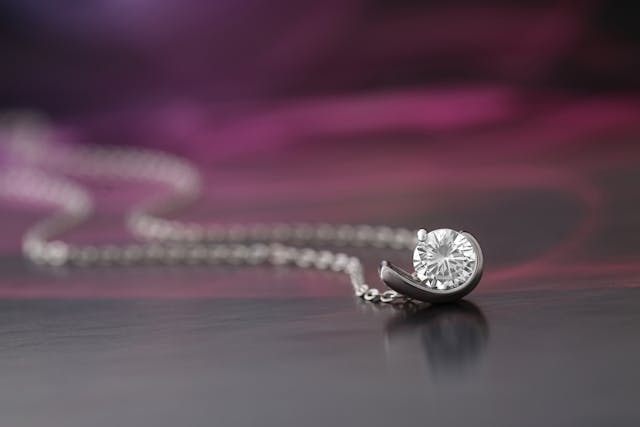
This speed does not diminish individuality. Instead, it enhances the collaborative experience. Designers can refine engagement rings, pendants, or earrings with precision, offering multiple options that remain structurally sound and aesthetically balanced.
Predictive Insights Into Emerging Trends
Artificial intelligence excels at analyzing patterns across vast datasets. By examining global consumer behavior and design movements, AI identifies emerging preferences in diamond cuts, setting styles, and overall silhouettes. This allows designers to stay ahead of shifts without relying solely on instinct.
However, trend awareness does not replace timeless design. AI often highlights enduring proportions and balanced structures that consistently resonate. Custom jewelry crafted with both data insight and classic sensibility is more likely to remain relevant for generations.
Enhancing Ethical and Sustainable Practices
Transparency and sustainability are increasingly important in fine jewelry. AI systems can track sourcing information, verify certifications, and streamline supply chain data. This level of traceability supports informed decision-making and responsible production.
Digital prototyping also reduces material waste. By refining designs virtually, fewer physical samples are required, minimizing resource consumption. The integration of AI thus aligns beauty with environmental awareness, shaping a more thoughtful future for custom jewelry.
Collaboration Between Human Craft and AI Precision
Despite its analytical strength, AI remains a tool guided by human creativity. Designers interpret data, make aesthetic judgments, and infuse emotion into each piece. Skilled artisans still set diamonds by hand, polish metal surfaces, and refine details with expertise that machines cannot replicate.
The partnership between technology and craftsmanship creates a balanced workflow. AI ensures structural accuracy and efficiency, while human artistry provides narrative depth and emotional resonance. Together, they elevate the design of rings, bracelets, pendants, and earrings to new heights.
Redefining the Client Experience
The impact of AI extends beyond production into the client journey. Interactive platforms allow individuals to experiment with different stone shapes, band styles, and settings before finalizing a custom design. This immersive process builds confidence and clarity.
Virtual visualization tools help clients understand scale and proportion in a realistic way. They can see how an engagement ring will sit on the hand or how a pendant will hang from a chain. This transparency strengthens trust and enhances satisfaction.
The Future of Custom Jewelry Design
As artificial intelligence continues to evolve, its influence will deepen. Advanced simulations may predict long-term wear patterns, while real-time customization platforms become even more intuitive. Designers will gain access to richer data insights, enabling them to craft pieces that blend innovation with timeless elegance.
From data to diamonds, the future of custom jewelry is shaped by precision and possibility. AI tools empower designers to refine structure, enhance brilliance, and personalize every detail with accuracy. Yet at its core, custom jewelry remains an art form driven by meaning, emotion, and human connection—now strengthened by intelligent technology.
Leave a Reply