
The carpet cleaning industry has become more competitive than ever. Customers expect quick responses, convenient booking options, transparent pricing, and reliable communication from the moment they inquire about a service until the job is complete. At the same time, business owners are looking for ways to reduce administrative work, improve efficiency, and keep technicians focused on delivering quality cleaning services rather than paperwork.
This is where smart AI tools are making a noticeable difference. Instead of replacing skilled professionals, these technologies help automate repetitive tasks, organize customer information, analyze business performance, and improve communication throughout the customer journey. Whether a carpet cleaning company serves homeowners, commercial facilities, or both, AI-powered solutions can simplify operations while supporting business growth.
Why AI Is Becoming Valuable for Carpet Cleaning Businesses
Running a carpet cleaning company involves much more than cleaning carpets. Business owners spend significant time answering calls, scheduling appointments, preparing estimates, following up with customers, handling invoices, managing reviews, and promoting their services online. These responsibilities are essential, but they can also reduce the time available for serving customers.
AI tools help automate many of these everyday activities. Rather than manually entering customer details, responding to every inquiry individually, or tracking appointments on paper, intelligent software can organize information and complete many routine tasks automatically.
The result is a smoother workflow that benefits both employees and customers. Office staff spend less time on repetitive work, technicians receive accurate schedules, and customers experience faster communication.
Perhaps most importantly, AI helps businesses become more proactive. Instead of reacting to missed appointments or forgotten follow-ups, companies can use automation to stay ahead of customer needs and maintain stronger relationships over time.
Smarter Scheduling and Appointment Management
Scheduling is one of the most important aspects of any carpet cleaning business. Poor scheduling creates delays, increases travel time, causes missed appointments, and frustrates customers. AI-powered scheduling systems help organize appointments more efficiently by considering multiple factors simultaneously.
These systems can evaluate technician availability, estimated job duration, travel distances, customer preferences, and existing appointments before recommending the most efficient schedule. Instead of relying solely on manual planning, businesses receive optimized schedules that reduce unnecessary driving and maximize productive work hours.
Many AI scheduling tools also learn from historical appointment data. If certain types of carpet cleaning projects consistently require more time than originally estimated, future schedules can automatically account for those trends.
Automated reminders further reduce scheduling problems. Customers receive confirmations before appointments, helping decrease no-shows while giving them opportunities to reschedule if necessary.
AI-Powered Customer Communication
Prompt communication has become one of the biggest factors influencing customer satisfaction. Many potential customers choose the company that responds first rather than the one offering the lowest price.
AI-powered virtual assistants and intelligent messaging systems can answer common questions throughout the day. They can provide information about service availability, explain cleaning processes, discuss preparation instructions, and collect initial customer details before a staff member becomes involved.
This immediate response keeps prospective customers engaged while reducing the workload for office staff.
Communication also improves after the appointment has been scheduled. Automated systems can send appointment reminders, notify customers when technicians are on the way, request reviews after service completion, and follow up regarding future maintenance cleanings.
Because these communications happen automatically, businesses maintain consistent customer contact without requiring additional administrative effort.
Improving Estimates and Service Recommendations
Preparing accurate estimates requires experience, especially when different carpet materials, room sizes, stain conditions, and additional services are involved. AI tools can assist by organizing customer information and analyzing previous projects with similar characteristics.
Rather than starting each estimate from scratch, intelligent systems compare historical job data and recommend reasonable pricing ranges based on similar completed work.
AI can also identify opportunities for additional services when appropriate. For example, if a customer schedules whole-house carpet cleaning, the system may recommend upholstery cleaning or area rug cleaning based on previous customer preferences or seasonal demand patterns.
These recommendations are not intended to pressure customers into unnecessary purchases. Instead, they help ensure customers are aware of services that may genuinely benefit their homes or businesses.
Over time, businesses gain a better understanding of which service combinations customers commonly request, allowing them to improve both pricing strategies and service packages.
Route Optimization for Mobile Carpet Cleaning Teams
Travel time represents a significant operating expense for mobile carpet cleaning companies. Fuel costs, vehicle wear, and technician downtime all increase when routes are poorly planned.
AI-based route optimization considers traffic conditions, appointment locations, technician availability, estimated job durations, and travel distances simultaneously.
Instead of manually arranging appointments based on incoming calls, businesses can build daily schedules that reduce unnecessary driving while allowing technicians to complete more jobs during regular working hours.
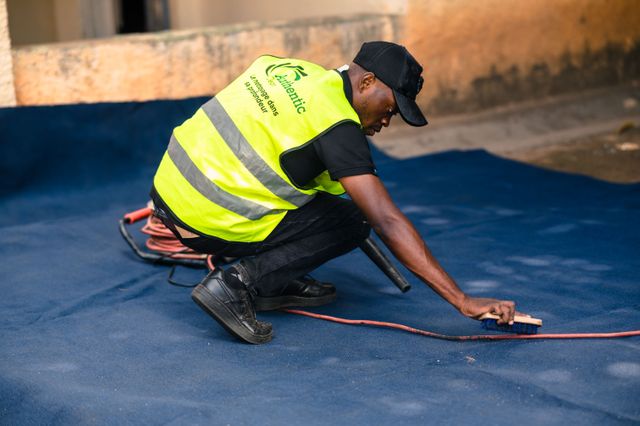
Some systems continuously adjust routes if cancellations occur or emergency appointments need to be added. This flexibility helps maintain productivity throughout the day while minimizing disruptions.
Better route planning also benefits customers by improving arrival accuracy and reducing delays caused by inefficient scheduling.
Better Marketing Through Customer Data Analysis
Marketing is no longer limited to newspaper advertisements or generic online promotions. AI allows carpet cleaning businesses to better understand customer behavior and deliver more relevant marketing campaigns.
By analyzing previous bookings, seasonal trends, repeat customer frequency, geographic service areas, and popular cleaning services, AI tools can identify patterns that might otherwise go unnoticed.
For example, customer data may reveal that residential carpet cleaning demand increases before holidays or that commercial cleaning requests rise during specific months. Marketing campaigns can then be scheduled accordingly.
AI also helps segment customers into meaningful groups based on previous services, allowing businesses to create more personalized communications instead of sending identical messages to everyone.
This targeted approach often improves customer engagement because recipients receive information that matches their interests and previous purchasing behavior.
Creating Better Content with AI Assistance
Producing regular marketing content can be difficult for busy carpet cleaning businesses. Blog articles, website updates, newsletters, and social media posts require consistent effort.
AI writing assistants can help generate initial drafts, suggest content ideas, improve grammar, organize information, and recommend relevant topics based on customer interests.
Human review remains essential. Business owners should always verify accuracy, adjust wording to reflect their expertise, and ensure published content represents their company’s voice.
When used responsibly, AI reduces the time required to produce helpful educational content while maintaining quality standards.
Supporting Local Search Visibility
Most carpet cleaning customers search for nearby service providers. AI can assist businesses by identifying commonly searched questions, suggesting locally relevant content ideas, and helping organize website information in ways that improve user experience.
AI may also analyze website performance, identify content gaps, recommend improvements for service pages, and monitor changing search trends.
These insights help businesses continuously improve their online presence rather than relying on outdated marketing strategies.
Managing Customer Relationships More Effectively
Successful carpet cleaning companies often depend on repeat business. Homes require periodic cleaning, while commercial facilities frequently schedule ongoing maintenance throughout the year.
AI-powered customer management systems help organize customer histories, including previous services, appointment dates, cleaning preferences, communication records, and follow-up recommendations.
Instead of manually reviewing customer files, businesses can quickly identify when previous clients may be ready for another cleaning.
Automated follow-up messages can remind customers about seasonal maintenance or recommended cleaning intervals without requiring staff members to remember every individual account.
This consistency strengthens customer relationships while increasing repeat business opportunities.
Using AI to Improve Business Decisions
Beyond daily operations, AI provides valuable business insights by analyzing operational data over time.
Business owners can identify which services generate the highest revenue, which neighborhoods produce the most repeat customers, and which marketing campaigns deliver the strongest return on investment.
AI can also evaluate technician productivity, appointment completion rates, customer satisfaction trends, and seasonal fluctuations.
These reports allow managers to make informed decisions based on measurable performance rather than assumptions.
For growing businesses, this information becomes increasingly valuable when planning staffing levels, equipment purchases, expansion into new service areas, or adjustments to pricing strategies.
Supporting Technicians in the Field
Technicians benefit from AI as well. Mobile applications powered by intelligent software can provide complete job information before arrival, including customer notes, previous cleaning history, property access instructions, and recommended cleaning procedures.
During appointments, technicians can document completed work, upload photographs, record observations, and generate service summaries without extensive paperwork.
Some AI systems also assist with inventory tracking by monitoring cleaning supplies, equipment maintenance schedules, and replacement needs.
Reducing administrative work allows technicians to focus more attention on delivering quality cleaning services while maintaining accurate service records.
Maintaining the Human Touch
Despite rapid technological advances, carpet cleaning remains a service built on trust, professionalism, and customer relationships. AI should enhance these qualities rather than replace them.
Customers still appreciate friendly technicians who explain cleaning methods, answer questions honestly, and provide personalized recommendations based on their home’s specific needs.
Businesses should view AI as a support system that handles repetitive administrative tasks while allowing employees to spend more time interacting with customers.
Finding the right balance between automation and personal service is often the key to successful AI adoption.
Preparing for the Future of Carpet Cleaning
Artificial intelligence will likely continue influencing how carpet cleaning businesses operate. Future developments may improve predictive scheduling, equipment maintenance, customer communication, pricing analysis, and operational forecasting even further.
Companies that gradually adopt practical AI tools today will likely be better prepared for these future advancements. Small improvements in scheduling, customer communication, marketing, and operational efficiency can produce meaningful long-term benefits without requiring major changes to the core cleaning process.
Rather than viewing AI as a complex technology reserved for large organizations, many carpet cleaning businesses are discovering that it can simplify everyday operations and support steady growth. By combining skilled technicians with intelligent automation, companies can deliver more responsive customer service, improve internal efficiency, strengthen marketing efforts, and make better-informed business decisions. As customer expectations continue to evolve, smart AI tools are becoming valuable partners in helping carpet cleaning businesses remain organized, competitive, and prepared for the future.
Leave a Reply