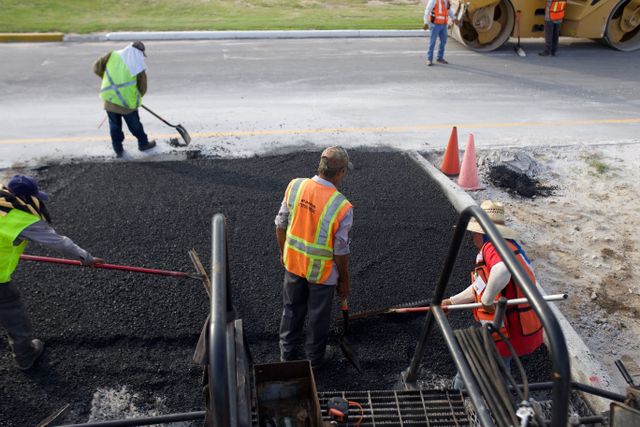
Asphalt paving is highly dependent on timing. Crews need to arrive when the site is ready, equipment has to be available, material deliveries must match the paving sequence, and weather can change an otherwise workable schedule within hours. Add several active job sites to the mix, and even a minor delay can affect the rest of the day.
Artificial intelligence is beginning to give contractors better ways to manage that complexity. Rather than replacing experienced supervisors, AI tools can analyze operational information and help teams recognize scheduling conflicts, maintenance priorities, productivity issues, and potential delays earlier. Recent research into pavement management and construction scheduling is already demonstrating how AI-based forecasting and optimization can support maintenance planning and resource allocation.
For companies providing asphalt paving and maintenance services, the practical opportunity is straightforward: use better information to keep crews productive, reduce unnecessary downtime, and make faster adjustments when conditions in the field change.
Turning Scheduling Into a More Responsive Process
Traditional scheduling can become outdated almost immediately after crews reach the field. A previous project runs late, equipment needs unexpected maintenance, material delivery is delayed, or site preparation takes longer than estimated. Managers then have to reorganize several connected activities manually.
AI-supported scheduling can make the process more responsive by analyzing project durations, crew availability, equipment requirements, travel times, task dependencies, and other operational constraints together. Instead of creating one schedule and expecting the day to follow it perfectly, teams can continuously reassess how changes affect upcoming work.
This is particularly valuable when contractors manage multiple projects simultaneously. If one job is delayed, the system can help identify which activities could potentially be shifted without creating another resource conflict. Research into intelligent construction scheduling has shown the potential for AI-driven approaches to optimize schedules under changing resource constraints.
The result is not necessarily a perfect schedule. It is a schedule that can respond more intelligently when reality differs from the original plan.
Matching Crews More Closely to the Work Ahead
Crew allocation is another area where better data can improve paving efficiency. Sending too many workers to a relatively simple maintenance project increases labor costs, while assigning too few people to a complex paving job can slow production and affect the entire schedule.
AI tools can analyze information from previous projects to help estimate labor requirements. Project size, work type, expected production, site accessibility, equipment needs, and historical completion times can all contribute to more informed staffing decisions.
Historical performance can also reveal recurring patterns. If certain projects routinely require more labor hours than originally estimated, planners can adjust future schedules instead of repeatedly making the same assumption.
AI can additionally help coordinate specialized skills. Rather than looking only at the number of available workers, planners can consider which crew members have experience with particular equipment, repairs, preparation work, or finishing activities.
Coordinating Equipment Across Different Job Sites
Paving operations depend heavily on equipment, and idle machinery can become expensive quickly. The problem is not always a shortage of equipment. Sometimes equipment simply is not positioned where it is needed.
AI-assisted planning can help managers understand how machinery is being distributed across projects. Expected completion times, transportation requirements, equipment availability, maintenance schedules, and upcoming project needs can be considered together.
This can reduce situations where a crew arrives ready to work but essential machinery remains committed to another project. It can also highlight equipment that is sitting unused and could potentially be reassigned.
Emerging research into AI-supported construction fleet management similarly focuses on balancing progress, resource allocation, costs, and changing conditions rather than relying entirely on static schedules.
For contractors operating across a wide service area, better equipment coordination can also reduce unnecessary transportation between sites.
Using AI to Improve Material Planning
Material timing is especially important in asphalt paving. Deliveries that arrive too early, too late, or in quantities that do not match actual production can disrupt the job.
Historical data can help improve quantity estimates by comparing planned material requirements with what was actually used on similar projects. Over time, AI models can identify patterns related to project type, pavement dimensions, site conditions, production rates, and previous estimating differences.
The same information can help teams coordinate deliveries with expected progress. If a project begins falling behind schedule, managers may be able to adjust upcoming deliveries rather than allowing the original material schedule to continue unchanged.
Better material planning also supports cost control. Consistently ordering more than necessary increases waste and makes estimating less reliable, while shortages can stop production and create additional delivery expenses.
AI becomes useful here because it can identify recurring discrepancies across many completed projects that might be difficult to recognize when jobs are reviewed individually.
Identifying Maintenance Needs Earlier
AI has applications beyond managing the day’s paving operations. It can also help determine where pavement maintenance should happen and when intervention may be most cost-effective.
Condition data collected from inspections, images, sensors, historical maintenance records, traffic information, and other sources can be analyzed to identify deterioration patterns. Instead of waiting until pavement damage becomes severe, teams or asset managers can use predictive information to prioritize sections showing signs of developing problems.
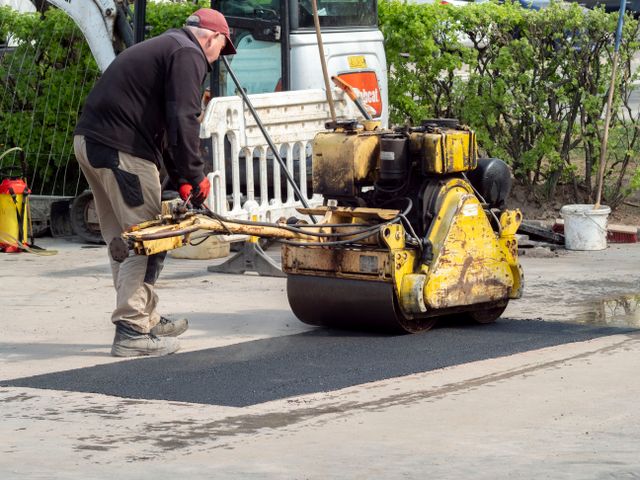
Recent pavement-management research has explored AI systems that combine condition assessment, deterioration forecasting, and maintenance optimization. One 2026 study, for example, developed an AI-driven digital-twin approach designed to support proactive pavement condition monitoring and maintenance scheduling.
Earlier intervention can change how maintenance resources are allocated. When appropriate treatments are scheduled before deterioration becomes severe, teams may have more opportunities to perform planned maintenance instead of responding primarily to urgent repairs.
Making Job-Site Progress Easier to Monitor
A schedule is only useful when managers know what is actually happening in the field. Traditionally, that information may arrive through phone calls, end-of-day reports, spreadsheets, photographs, or supervisor updates.
Digital monitoring combined with AI can shorten the gap between field activity and management decisions. Project progress, completed tasks, equipment status, labor information, and site updates can feed into a more current view of operations.
When actual progress begins falling behind expectations, the difference can be flagged earlier. Managers can investigate whether the cause is equipment downtime, material availability, site conditions, staffing, or another issue before the delay spreads into subsequent activities.
Research into digital construction monitoring has demonstrated how more continuous field information can support earlier delay detection and stronger schedule visibility.
For paving businesses managing several simultaneous projects, that visibility can be more useful than simply receiving additional data. The goal is to identify which information requires action.
Planning Around Weather and Other Uncertainty
Few paving schedules operate under completely predictable conditions. Weather changes, traffic restrictions, customer access requirements, equipment breakdowns, and unexpected site conditions can all disrupt planned work.
AI tools can combine forecasts and operational information to help managers evaluate potential scenarios. If unfavorable weather threatens one project, teams can examine whether another job could be advanced or whether maintenance activities could be reorganized.
The same principle applies to other disruptions. Instead of rebuilding the schedule manually after every change, decision-support tools can evaluate how alternative assignments affect crews, equipment, travel, and project deadlines.
This capability becomes increasingly valuable as operations grow. A supervisor may easily understand the consequences of moving one crew between two projects. Understanding the downstream effects across ten or twenty simultaneous activities is considerably more difficult.
AI can perform those comparisons quickly while leaving the final operational decision with experienced managers.
Learning From Completed Paving Projects
One of AI’s most practical benefits is its ability to turn completed projects into useful planning information.
Every job produces data. Teams know how many labor hours were used, how much material was consumed, how long equipment operated, what caused delays, and how actual completion compared with the estimate. Yet much of that information is rarely used after a project closes.
AI-assisted analysis can find recurring relationships across this history. Perhaps certain site conditions regularly increase preparation time. Maybe particular project types require more equipment hours than estimated. Certain areas may consistently involve longer travel or delivery delays.
Recognizing those patterns can improve future estimates and scheduling decisions.
The process creates a feedback loop: estimates produce plans, field activity generates actual results, and those results improve the assumptions used for the next project.
AI Should Support Field Experience, Not Replace It
Asphalt paving involves decisions that cannot always be reduced to historical data. Experienced supervisors can recognize subtle changes in surface conditions, material behavior, site accessibility, drainage, traffic, and crew performance.
AI does not eliminate the need for that expertise. Its strongest role is helping people process more information and recognize patterns earlier.
Research into pavement maintenance is increasingly exploring this human-AI model. Recent work has examined systems in which AI handles complex optimization while human feedback helps the system adapt to changing operational conditions and constraints.
That approach is particularly appropriate for paving. Algorithms can compare schedules and analyze historical patterns, but experienced professionals still need to determine whether a recommendation makes sense under actual field conditions.
Building a More Efficient Asphalt Operation
AI in asphalt paving does not have to mean autonomous machinery or completely automated job sites. Some of its most useful applications are much less dramatic: predicting delays, improving schedules, matching crews to projects, coordinating equipment, refining material estimates, identifying maintenance priorities, and learning from completed work.
These improvements become increasingly valuable as contractors manage more crews and job sites. Small inefficiencies repeated across dozens of projects can translate into substantial amounts of lost labor time, equipment downtime, unnecessary travel, material waste, and scheduling disruption.
The advantage of AI is its ability to connect information that is often managed separately. Crew schedules can be considered alongside equipment availability. Historical production can influence future estimates. Pavement condition can influence maintenance priorities, while real-time progress can help managers adjust the next stage of work.
As these capabilities develop, the goal should remain practical. Asphalt contractors do not need technology simply for the sake of becoming more digital. They need better ways to decide what should happen next, recognize problems earlier, and keep people and equipment productive.
When AI is used in that supporting role, it can help transform paving management from a largely reactive process into one that is more predictive, coordinated, and prepared for the changing conditions of real job sites.
Leave a Reply