Custom diamond jewelry often begins with something that is difficult to explain precisely. A customer may have a general picture of an engagement ring in mind, a few design references saved, an inherited diamond they want to reuse, or simply a feeling they want the finished piece to capture. Turning those ideas into a practical design has traditionally required several conversations, sketches, and revisions.
Artificial intelligence is introducing new ways to handle those early stages. AI tools can help organize inspiration, generate preliminary concepts, compare design directions, and make customization more visual before metal is shaped or a diamond is set. Combined with established digital design and manufacturing methods, these tools can shorten the distance between “I have an idea” and “this is what I want.”
That does not mean custom jewelry is becoming an automated product. A computer-generated image does not account for every detail of stone security, metal thickness, comfort, durability, or future maintenance. The most useful role for AI is earlier in the process: helping customers and jewelers communicate, explore, and refine ideas before skilled design and craftsmanship turn them into wearable jewelry.
AI Can Help Turn Vague Inspiration Into a Starting Point
Many customers know what they like when they see it but struggle to describe it.
They may use words such as delicate, architectural, vintage-inspired, minimal, organic, bold, or understated. Those descriptions are useful, but two people can interpret the same word very differently.
AI-assisted design tools can help translate those preferences into visual starting points.
A customer might describe the overall style, preferred diamond shape, metal appearance, setting profile, and several details they want included. The system can then generate different concepts that make those preferences easier to discuss.
These concepts do not need to become final designs. Their value is in revealing direction.
A customer may discover that they prefer a lower setting than originally imagined or that a particular arrangement of smaller diamonds makes the center stone feel too busy. Seeing these possibilities early can make conversations with the jeweler more specific.
AI becomes a communication tool rather than the designer making the final decision.
Inspiration Can Be Organized More Intelligently
Custom jewelry customers often arrive with a collection of references.
One image may have the preferred band. Another shows the right stone orientation. A third has an interesting setting profile, while a fourth captures the overall feeling the customer wants.
The challenge is that these references may have very little in common at first glance.
AI tools can help identify repeated characteristics across a collection of images and descriptions. They may recognize that several references share similar proportions, setting styles, geometric details, or levels of ornamentation.
This can help the jeweler understand what is actually attracting the customer.
Sometimes the customer may not realize there is a consistent pattern. They might describe their saved designs as completely different while repeatedly choosing pieces with low profiles, elongated center stones, or restrained detailing.
Recognizing those patterns can make the custom process more focused.
The jeweler can then separate meaningful preferences from elements that simply happened to appear in one inspiration image.
Customers Can Explore More Ideas Before Committing
Physical jewelry production takes time and materials. That naturally limits how many versions of a design can be produced simply for comparison.
Digital exploration changes the equation.
AI can generate multiple concept directions quickly, allowing customers to compare ideas before the design enters detailed development.
For example, the same center diamond could be explored with several band styles, stone arrangements, or setting profiles. A customer who is uncertain between a modern and more traditional direction could see how each approach changes the character of the piece.
This can encourage experimentation without requiring every experiment to become a physical prototype.
More options are not automatically better, however.
Generating dozens of variations can make the decision harder rather than easier. The jeweler’s role includes narrowing possibilities according to the customer’s priorities, budget, selected materials, and practical requirements.
AI can open the design process. Good professional guidance prevents that process from becoming endless.
Personalization Can Go Deeper Than Engraving
Personalized jewelry has long included names, dates, initials, and messages. AI-assisted design may make it easier to explore personalization that is incorporated directly into the structure of the piece.
A meaningful shape could influence a hidden detail beneath a diamond. An architectural feature from an important place might inspire a pattern. A flower, landscape, family symbol, or other personal reference could be simplified into a form suitable for jewelry.
The key is interpretation rather than literal reproduction.
A ring does not need to look like a building simply because architecture inspired it. A designer might instead borrow a repeated line, proportion, or geometric element and incorporate it subtly.
AI can help generate several interpretations of that reference.
The jeweler can then determine which ideas can be translated effectively into metal and stone.
This creates opportunities for customization that may not be immediately obvious to anyone except the wearer, making the design personal without requiring every meaningful element to be visually prominent.
AI Can Help Customers Compare Diamond Shapes Within a Design
Choosing a diamond independently and choosing one as part of a finished design can feel very different.
A stone’s shape affects the proportions of the entire piece.
An elongated center stone may influence band width and side-stone placement differently from a round or square shape. Changing the center stone can also alter how delicate or substantial the surrounding setting appears.
Digital visualization can make these differences easier to understand.
Instead of looking at diamonds separately and imagining how each might work in a ring, customers can compare approximate design concepts built around different shapes.
AI may assist by generating initial variations quickly.
Actual stone dimensions still matter. Two diamonds with the same general shape and carat weight can have noticeably different proportions.
For that reason, the final custom design should be developed around the specific stone whenever appropriate rather than relying entirely on a generic digital representation.
AI can help compare directions. Precise jewelry design handles the actual dimensions.
Existing Jewelry Can Become the Beginning of Something New
Custom jewelry does not always start with a new diamond.
Customers may have an engagement ring they no longer wear, a family stone inherited from a relative, or several pieces they would like to combine into something more useful.
Redesigning sentimental jewelry can be difficult because the customer may want change without losing the connection to the original piece.
AI-assisted concept development can help explore that balance.
A designer could consider several ways to incorporate an existing diamond while changing the overall style. Elements from the original piece might be retained subtly, or the stone could be placed into a completely different setting.
Digital visualization gives customers an opportunity to consider these options before the original jewelry is altered.
Physical evaluation remains essential.
Older diamonds, settings, and metals need to be examined to determine their condition and whether particular materials can be reused safely. AI can imagine possibilities, but it cannot determine the physical condition of a stone or setting from an idea alone.
AI and Digital Modeling Have Different Jobs
AI-generated jewelry imagery and professional digital modeling can easily be confused, but they serve different purposes.
AI is particularly useful for concept exploration. It can create visual possibilities quickly and help establish the overall direction of a design.
A professional digital model is much more technical.
It defines dimensions, stone sizes, metal thicknesses, setting structures, clearances, and other details needed to manufacture the piece.
An AI-generated ring may appear perfectly realistic while containing structural details that would not work in actual jewelry. Prongs may connect incorrectly, stones may appear unsupported, or decorative elements may be too thin to manufacture reliably.
That is why the transition from concept to technical design is so important.
AI can answer, “What could this look like?”
Professional jewelry design must answer, “How can this actually be made?”
The two processes can complement one another, but they should not be treated as interchangeable.
Better Visualization Can Make Revisions More Meaningful
One of the most useful parts of digital custom design is the ability to review a piece before production.
Traditional sketches remain valuable, particularly for communicating artistic direction, but not every customer finds it easy to imagine a three-dimensional object from a drawing.
Detailed renderings can make the design easier to understand.
Customers can examine the ring from the top, side, and different angles. They can see how high the center stone sits, how the band meets the setting, and where smaller stones or decorative elements are positioned.
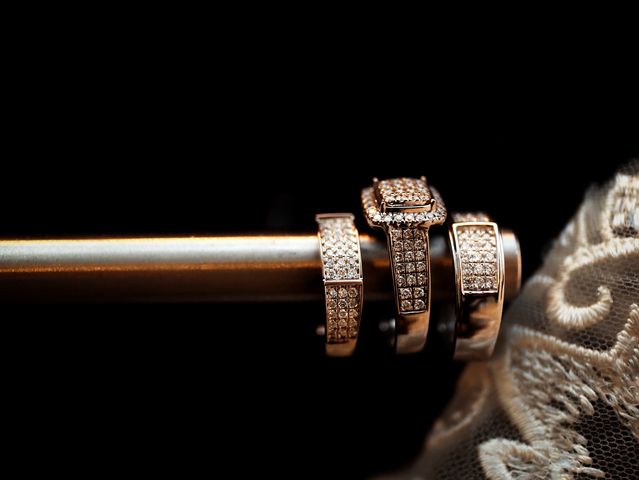
AI may make early visualization faster, while more precise digital design can provide the accuracy needed closer to production.
This makes revision more specific.
Instead of saying that something simply “doesn’t look right,” a customer can identify the exact detail they would like changed.
Fewer misunderstandings before production can make the custom process more efficient for both customer and jeweler.
AI May Help Balance Design Preferences With Budget
Custom does not have to mean unlimited spending.
Most customers work within some type of budget, and design decisions influence how that budget is allocated.
AI-assisted tools may help explore alternative approaches while preserving the main character of a design.
If one concept requires more stones or complicated manufacturing than expected, alternative versions could be generated with different proportions or fewer decorative elements.
The customer can then decide which details matter most.
This does not mean AI should independently recommend a diamond or tell someone what they should spend.
Jewelry budgets are personal, and pricing depends on actual diamonds, metals, labor, craftsmanship, and design complexity.
The useful role for technology is showing how changing one design decision can affect the overall concept.
A skilled jeweler can then help translate those choices into realistic options based on actual materials and production requirements.
AI Can Support More Precise Design Conversations
Custom jewelry requires communication between people who often speak very different professional languages.
A jeweler may think in terms of setting height, stone dimensions, prong structure, gallery design, metal thickness, and manufacturing tolerances. A customer may simply know that they want the ring to look “lighter” or “less bulky.”
AI-assisted visualization can help bridge that gap.
If a customer says the design feels too heavy, several visual variations may help determine what they actually mean. Perhaps the band is too wide, the setting is too tall, or there are too many surrounding stones.
Seeing alternatives can make feedback clearer.
This is especially useful when custom work is handled partly through remote consultations.
Instead of relying entirely on long written explanations, both sides can refer to the same visual concept.
Clearer communication can reduce revisions and make customers more confident that the jeweler understands what they are trying to achieve.
Human Expertise Determines Whether the Design Will Last
A custom piece should not only look good when it is new. It should be designed for the way it will actually be worn.
That is where human jewelry expertise becomes essential.
Very thin components may look elegant in a generated image but lack sufficient durability. Certain stone arrangements can create difficult maintenance areas, while an extremely high setting may not suit someone who works frequently with their hands.
Stone security is particularly important.
Diamonds and other stones need settings designed around their physical dimensions and expected wear. Decorative details cannot compromise the structure responsible for holding valuable stones in place.
A jeweler also needs to think about future maintenance.
Prongs may eventually require attention, surfaces will wear, and some pieces may need resizing or repair over time.
AI can optimize the visual idea. Experienced designers and craftspeople ensure that the jewelry remains a functional object rather than merely a beautiful digital image.
AI Can Make Remote Custom Design Easier
Custom jewelry no longer requires every design discussion to happen across a jewelry counter.
Customers and designers can communicate through video consultations, shared images, digital models, and remote approvals. AI-generated concepts can make those conversations even more visual.
A customer can describe an idea, review several preliminary directions, provide feedback, and see revisions without needing to travel for every step.
This can be particularly useful when several people are involved in a design or when a customer chooses to work with a jeweler outside their immediate area.
Some decisions still benefit from physical interaction.
Diamond appearance, scale, ring sizing, metal feel, and fine craftsmanship can be difficult to judge perfectly through a screen.
The future custom process is therefore likely to combine digital convenience with physical evaluation where it adds value.
AI expands access to the design conversation without making the physical qualities of jewelry irrelevant.
Originality Still Requires More Than Generating an Image
One concern surrounding AI design is whether easy access to generated concepts will actually make jewelry more original.
Generating a visually unusual ring is easy. Creating a meaningful, wearable, well-proportioned piece is much harder.
AI systems learn from existing information and design patterns. Their output can therefore repeat familiar visual ideas even when the resulting image initially appears distinctive.
True customization requires decisions.
Why is this stone positioned this way? Why does the band have this proportion? What does the hidden detail mean? How does the design connect to the person wearing it?
These questions move the process beyond surface appearance.
AI can expand the pool of inspiration, but originality comes from how those ideas are selected, refined, combined, and translated into a piece with a clear reason for looking the way it does.
Privacy Matters When Personal Stories Become Design Inputs
Custom jewelry can involve surprisingly personal information.
Customers may share photographs, family stories, dates, handwritten messages, inherited jewelry, relationship details, or images connected to important memories.
When AI tools are involved, jewelers need to consider how this information is handled.
Not every personal reference needs to be uploaded into an external system. Businesses should understand what information a tool stores, how it may be used, and whether customer data remains appropriately protected.
Customers should also have reasonable clarity about when AI is involved in the design process.
This becomes especially important when photographs of family jewelry, documents, or personally meaningful materials are being used.
Technology should make personalization easier without requiring customers to give up unnecessary privacy.
Responsible use of AI is therefore part of good design practice, not simply an IT concern.
The Jeweler’s Role May Become More Valuable
When software can generate hundreds of jewelry concepts quickly, it might appear that the designer’s role becomes smaller.
In practice, the opposite may happen.
More possibilities create a greater need for informed selection.
A skilled jeweler can recognize which ideas are practical, which proportions will work at actual scale, which settings provide appropriate security, and which decorative elements may become maintenance problems.
They can also recognize when technology is solving a problem that does not need solving.
A simple design may be exactly what suits a particular diamond and wearer.
The jeweler increasingly becomes a combination of designer, technical translator, craft expert, and editor—using technology where it improves the process while rejecting generated ideas that do not make sense.
AI can produce possibilities. Expertise turns the right possibility into jewelry.
From Artificial Intelligence to Something Deeply Personal
The interesting contradiction in AI-assisted custom jewelry is that highly automated technology can ultimately help create something extremely personal.
AI can provide a faster starting point. It can help customers organize scattered inspiration, compare design directions, visualize different diamond shapes, and communicate preferences that are difficult to describe in words.
Digital modeling can then turn the selected direction into precise geometry, while modern manufacturing techniques help produce the components required for the piece.
But those technologies do not determine why the jewelry matters.
That still comes from the person commissioning it, the story behind the design, and the decisions made throughout the process. Skilled jewelers remain responsible for translating those decisions into something secure, comfortable, durable, and carefully finished.
The future of custom diamond jewelry is therefore not about asking AI to design a ring and accepting whatever appears on the screen. It is about using new tools to make the creative process more open and understandable.
When technology handles exploration and visualization while people provide meaning, judgment, and craftsmanship, the journey from an initial idea to a genuinely one-of-a-kind piece can become more collaborative than ever.
Leave a Reply