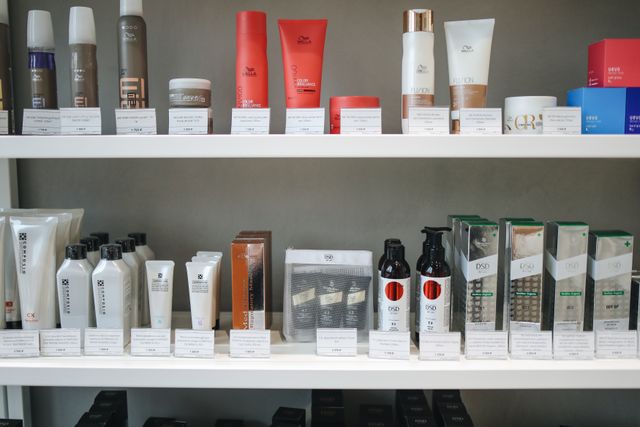
Beauty shopping can become complicated surprisingly quickly. A customer may walk into a store knowing that they need a moisturizer, cleanser, hair product, or cosmetic item, only to face dozens of choices with different ingredients, textures, finishes, shades, and intended uses. More choice can be valuable, but it can also make a simple purchase feel like research.
Artificial intelligence is beginning to change that experience. Within a premium beauty care store, AI tools can help organize product information, narrow large selections, support staff recommendations, improve inventory decisions, and make digital and physical shopping feel more connected. The objective is not to replace knowledgeable employees or make personal care decisions automatically. It is to make useful information easier to reach.
That distinction matters in beauty retail. Customers often want personalization, but they also want control, privacy, and human judgment. The strongest uses of AI will likely be those that quietly make shopping easier without turning every interaction into an automated consultation.
AI Can Make Large Product Selections Easier to Navigate
Premium beauty retail offers customers enormous variety.
That variety can become difficult to navigate when several products appear to address similar needs. Packaging may use different terminology, while ingredient lists and product descriptions can make direct comparison challenging.
AI can help organize this information around the customer’s actual question.
Instead of manually browsing an entire category, a shopper might indicate preferences such as texture, finish, fragrance, product format, budget, or ingredients they wish to avoid. A digital assistant could then narrow the available selection.
This does not necessarily mean declaring one product “best.”
A more useful approach is reducing a large catalog to several relevant possibilities and explaining meaningful differences between them.
The final decision remains with the customer, but the search becomes considerably more manageable.
Personalization Can Move Beyond Basic Recommendations
Retail personalization has traditionally relied heavily on broad categories or previous purchases.
AI can work with more detailed combinations of preferences.
Two customers shopping in the same category may want completely different experiences. One might prioritize simplicity and prefer a short routine, while another enjoys experimenting with multiple products. Someone may value fragrance-free options, while another considers scent an important part of the experience.
Smarter recommendation systems can account for several preferences simultaneously.
This can create suggestions that feel more relevant than generic “customers also bought” recommendations.
However, personalization should remain transparent.
Customers should be able to understand why something has been suggested and adjust the preferences behind the recommendation.
Useful personalization feels like assistance. Poor personalization can feel like the system has made assumptions the customer never asked it to make.
AI Can Give Store Associates Faster Access to Product Knowledge
Premium retail still depends heavily on knowledgeable staff.
Customers may ask employees to compare several items, explain product characteristics, identify alternatives, or locate something that fits specific preferences.
Remembering every detail across a large and frequently changing assortment can be difficult.
An AI-assisted internal knowledge tool could help employees retrieve approved product information quickly.
Instead of searching through multiple documents or relying entirely on memory, an associate could ask a specific question and receive relevant information from the retailer’s product database.
This could be particularly useful when new products arrive.
The employee remains responsible for the customer conversation, but information retrieval becomes faster.
The quality of the underlying data is critical. An AI system that confidently presents outdated or incorrect product information can create more problems than it solves.
Virtual Experiences Can Reduce Uncertainty
One challenge in beauty retail is that customers often want to imagine a result before making a purchase.
Digital visualization can help in certain categories.
AI-assisted virtual experiences may allow shoppers to explore approximate shades, styles, or visual effects before narrowing their choices.
These tools can be useful for experimentation because customers can compare possibilities quickly without physically trying every option.
They also have limitations.
Lighting, cameras, screens, individual physical characteristics, and the real behavior of a product can all affect results. A digital preview should therefore support exploration rather than promise an exact outcome.
Retailers should communicate that distinction clearly.
Used appropriately, virtual experiences can help customers arrive at a smaller selection that they can then evaluate more carefully.
Smarter Search Can Improve Online Beauty Shopping
Searching for beauty products online can be frustrating when customers do not know the exact terminology used by the retailer.
Traditional search systems often depend heavily on matching specific words.
AI-powered search can interpret intent more flexibly.
A customer might describe what they want conversationally rather than entering an exact product category. The system can use that description to identify relevant attributes and narrow the catalog.
This creates an experience closer to asking an informed employee for directions.
It can also help customers discover alternatives.
If a preferred item is unavailable, intelligent search could identify products with comparable characteristics instead of simply returning an out-of-stock message.
Better search reduces the amount of work customers need to do before they can start making meaningful comparisons.
AI Can Help Connect Online Research With In-Store Shopping
Beauty customers frequently move between digital and physical channels.
Someone might research products online, visit a store to examine them, return home to compare options, and purchase later through another channel.
Retail systems often treat those interactions separately.
AI can help create greater continuity where customers choose to participate.
Saved preferences, shopping lists, previous purchases, or product comparisons could make it easier to continue a shopping journey rather than restarting every time the channel changes.
For store associates, appropriate access to customer-selected information could also improve assistance.
The key is consent.
Customers should not have to surrender unnecessary personal information simply to receive useful service. The most successful connected experiences will allow people to decide how much continuity they actually want.
Inventory Intelligence Can Improve Product Availability
A highly personalized shopping experience loses much of its value if recommended products are repeatedly unavailable.
This makes inventory one of the less visible but highly important uses of AI in beauty retail.
Demand can vary according to location, season, promotions, trends, local preferences, and product life cycles. Traditional forecasts based primarily on historical averages may struggle when those patterns change quickly.
AI-assisted forecasting can analyze larger combinations of demand signals.
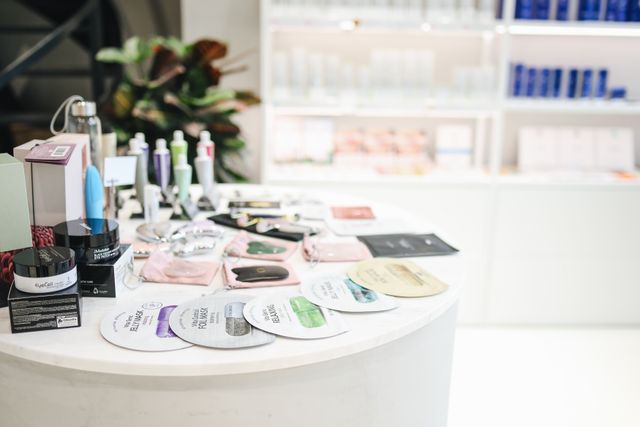
Retailers can use those forecasts to make more informed replenishment decisions and identify products that may require additional attention.
The goal is not perfect prediction.
Beauty trends can move unexpectedly, and no forecasting system eliminates uncertainty.
The practical benefit is giving inventory teams better information when deciding what to reorder, where to position stock, and which items may be at risk of running out.
AI Could Help Stores Respond Faster to Emerging Trends
Beauty trends can develop quickly through creators, online communities, seasonal influences, and cultural moments.
For retailers, distinguishing a lasting shift from temporary online excitement can be difficult.
AI tools can help analyze large volumes of trend information and identify patterns that would be difficult to monitor manually.
Retailers might detect growing interest in particular product characteristics, formats, colors, or routines earlier.
That information can support merchandising and inventory planning.
But trend detection should not become automatic trend chasing.
Online attention does not always translate into sustained purchasing behavior. A retailer that responds aggressively to every short-lived spike could end up with unnecessary inventory.
Human merchandising judgment remains necessary to determine which signals fit the store’s customers and positioning.
Better Forecasting Can Reduce Excess Inventory
Premium beauty retailers need enough inventory to maintain availability without carrying unnecessary quantities.
Too little stock creates missed purchases and disappointed customers. Too much ties up capital and can become particularly problematic for products with shelf-life considerations.
AI can support more detailed forecasting by examining demand at the product and location level.
It may also help identify slow-moving items earlier.
This gives retailers more time to respond instead of discovering excess stock only after demand has fallen significantly.
The response does not always need to be discounting.
Inventory might be redistributed between locations, future purchasing could be adjusted, or merchandising could be changed.
Better forecasting gives decision-makers more options because potential problems become visible earlier.
Customer Service Can Become More Responsive
Beauty questions do not occur only while a store employee is available.
Digital assistants can provide basic support outside normal service interactions, helping customers locate information about orders, product availability, store policies, or catalog characteristics.
The important word is basic.
Automated systems should recognize when a question requires human judgment.
A customer experiencing a possible adverse reaction, for example, should not receive confident medical guidance from a retail chatbot. Appropriate escalation and clear boundaries are essential.
AI works well when it handles routine information efficiently while making human assistance easier to reach for complicated situations.
The objective should not be preventing customers from speaking to people.
It should be preventing customers from waiting unnecessarily for information that a reliable system can provide immediately.
AI Can Support More Relevant Promotions
Traditional retail promotions can be broad.
A customer may receive offers for categories they never purchase while missing promotions that actually match their interests.
AI can help retailers make marketing more selective.
With appropriate customer permission and responsible data practices, purchase patterns and stated preferences can help determine which messages are likely to be useful.
This can reduce irrelevant communication.
Personalization, however, needs limits.
Beauty purchases can reveal information customers consider private. Retailers should be cautious about making sensitive assumptions from shopping behavior or creating messages that feel invasive.
Good personalization should feel convenient rather than unsettling.
Sometimes the smartest use of customer data is choosing not to use information simply because it is technically available.
Visual Recognition Could Make Product Discovery Easier
Customers do not always know the name of what they are looking for.
They may have a photograph, remember the appearance of packaging, or want to find something visually similar to an item they have seen elsewhere.
AI-powered visual search can create another route into the product catalog.
A customer could potentially use an image to locate related colors, styles, packaging, or product categories.
For store teams, visual tools might also support merchandising checks or inventory-related tasks.
Accuracy remains important.
Visual similarity does not necessarily mean two products have the same formulation, purpose, or suitability. Systems need to distinguish between “looks similar” and “works the same way.”
Used with that limitation in mind, visual search can make product discovery faster and more intuitive.
Privacy Will Become Part of the Premium Experience
As beauty retail becomes more personalized, businesses will potentially handle more customer information.
That makes privacy part of customer service.
Shoppers should understand what information is being collected, why it is useful, and whether they can receive service without providing it.
Data collection should be proportionate to the benefit being offered.
A simple product recommendation does not necessarily require a detailed customer profile.
Retailers should also be careful with images used for virtual experiences or visual analysis. Customers need confidence that personal data is being handled appropriately.
Premium service has traditionally been associated with attention, expertise, and convenience.
In an AI-enabled retail environment, respectful data practices will increasingly belong on that list.
Human Expertise Becomes More Valuable, Not Less
AI can retrieve information quickly, but beauty retail contains questions that depend on conversation and judgment.
A skilled employee can notice when a customer is uncertain, ask follow-up questions, explain tradeoffs, and simplify choices without making the interaction feel mechanical.
People can also recognize when a question moves beyond ordinary retail advice.
AI should strengthen this role rather than compete with it.
If technology handles repetitive product searches, routine stock questions, and administrative tasks, employees can spend more time on meaningful customer interactions.
Training will therefore remain important.
Associates need both product knowledge and an understanding of what AI tools can and cannot reliably do.
The future store employee may have better digital assistance, but customers will still value someone who can listen and communicate clearly.
Smarter Beauty Shopping Is About Reducing Friction
The most useful AI applications in premium beauty retail may eventually become almost invisible.
Customers may simply notice that search works better, recommendations are more relevant, products are easier to compare, desired items are more consistently available, and employees can answer questions more quickly.
Behind those improvements could be AI supporting forecasting, information retrieval, personalization, visual search, customer service, and inventory decisions.
None of these tools eliminates the fundamentals of good retail.
Products still need to meet expectations. Stores need accurate information. Employees need training. Inventory needs careful management. Customers need respectful service and control over their choices.
AI becomes valuable when it makes those fundamentals easier to deliver.
The future of premium beauty retail is therefore unlikely to be a completely automated store where algorithms make every decision. It is more likely to be a blended experience: intelligent tools handling complexity behind the scenes while customers continue to explore, compare, ask questions, and make their own choices.
That balance could make beauty shopping feel both more personal and less complicated—the combination that may ultimately matter far more than the technology itself.
Leave a Reply